keratoconus
CAIRS Treatment (Corneal Allogenic Intrastromal Ring Segments)
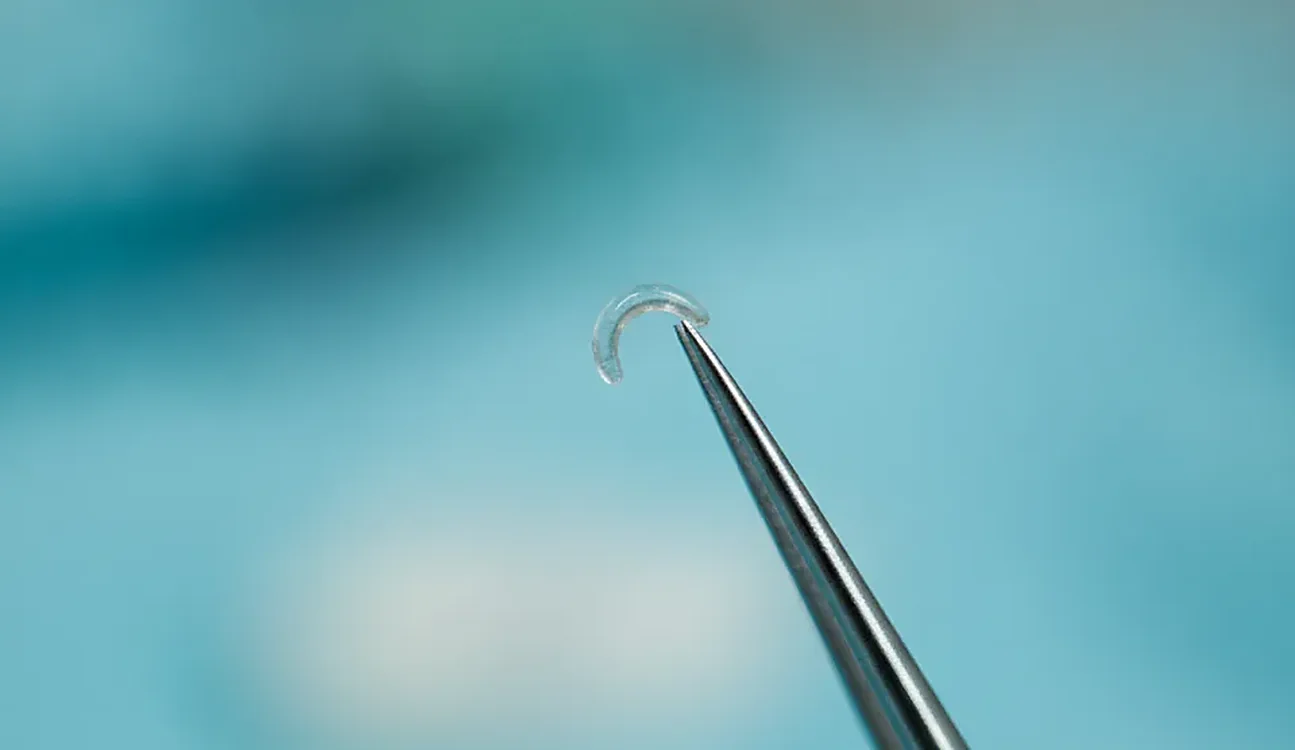
CAIRS (Corneal Allogenic Intrastromal Ring Segments) is a next-generation ring method in keratoconus treatment in which segments prepared from natural corneal tissue, rather than synthetic materials, are placed inside the cornea.
Prof. Dr. Efekan Coşkunseven
Ophthalmology · Istanbul
{ AI · preliminary guidance }
onlineLet's talk about keratoconus

AI responses do not replace a medical diagnosis.
Quick Answer
In CAIRS, the segments placed inside the cornea are produced from natural human corneal tissue. These natural segments have high biocompatibility and are placed into channels opened with a femtosecond laser with the aim of reshaping the cornea and improving visual quality.
Contents4 sections
What Is CAIRS?
CAIRS (Corneal Allogenic Intrastromal Ring Segments) is a modern surgical technique used in keratoconus treatment. It is based on the principle of using natural corneal tissue instead of synthetic materials.
It relies on the segments placed inside the cornea being made from natural human corneal tissue. Using femtosecond laser technology, precise channels are created inside the cornea, and these natural corneal segments are placed into them.
Main Goals
- Making the shape of the cornea more regular
- Improving visual quality
- Delaying progression toward corneal transplantation
- Increasing contact lens tolerance
Advantages
- High biocompatibility (use of natural tissue)
- Improved tissue tolerance
- Reduced risk of foreign-body reaction
- Precise application with femtosecond laser
Recovery After Surgery
- First day: Mild stinging, possible tearing
- First week: Vision begins to sharpen
- First month: Improvement in quality is felt
- Full stabilization: A few months
Suitability is determined following a detailed examination; it is not suitable for every keratoconus patient.
The results of any surgical or invasive procedure may vary from person to person.
Last updated:
2 questions
Frequently Asked Questions
Short answers to the questions patients ask most about this treatment. Your personal situation is assessed during the examination.
Didn't find your question?
Send us your question directly and our team will get back to you.
-
01 What is the difference between CAIRS and classic rings (Intacs/Keraring)?
Classic rings are made from synthetic (biocompatible plastic) material, whereas CAIRS is prepared from natural human corneal tissue. This provides high biocompatibility and better tissue tolerance, reducing the risk of a foreign-body reaction.
-
02 Is CAIRS suitable for everyone?
Suitability is determined following a detailed examination; it is not suitable for every keratoconus patient.
Didn't find your question?
Send us your question directly and our team will get back to you.
Related topics
Treatments often evaluated together
-
Intracorneal Ring Segment Treatment (Intacs / Keraring)
In keratoconus and corneal shape disorders, transparent ring segments (Intacs / Keraring) placed inside the cornea reshape the corneal surface; corneal curvature is reduced, astigmatism is lowered, and visual quality is improved.
-
Keratoconus Treatment
Keratoconus is a progressive eye disease in which the cornea gradually thins and bulges forward into a cone shape over time. Early diagnosis and the choice of an appropriate method (crosslinking/CXL, CAIRS, and intracorneal ring segments) are critical for controlling the disease.
-
Corneal Collagen Cross-Linking (CXL / Cross-Linking)
CXL is a method used in keratoconus treatment to increase the structural strength of the cornea in order to halt the progression of the disease. It was first applied in Turkey in 2004 by Prof. Dr. Efekan Coşkunseven.
Clinic


Book an Appointment
Your information reaches Prof. Dr. Efekan Coşkunseven's clinic. A response is made within 24 hours.