cataract
Femtosecond Laser-Assisted Cataract Surgery (FLACS)
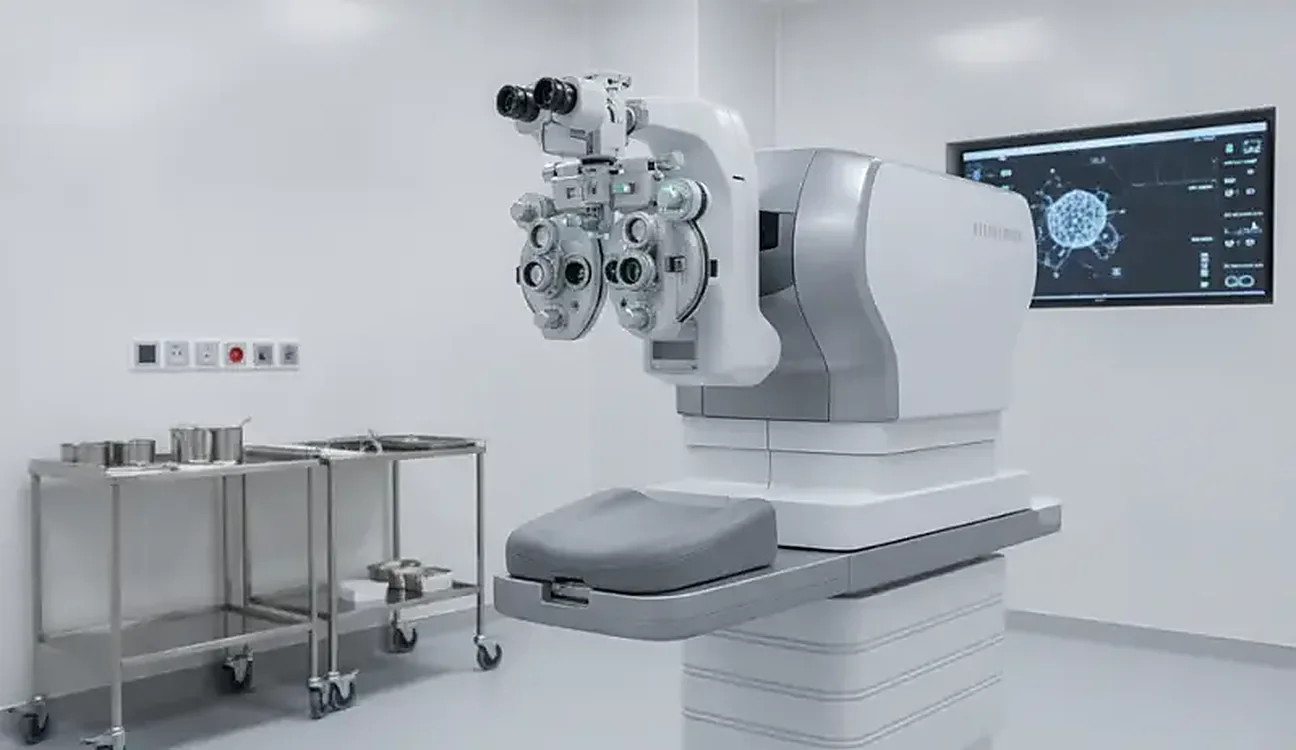
FLACS is an advanced method that performs certain stages of cataract surgery with a computer-controlled femtosecond laser. Corneal incisions, capsule opening, and lens fragmentation are performed by the laser with micron-level precision.
Prof. Dr. Efekan Coşkunseven
Ophthalmology · Istanbul
{ AI · preliminary guidance }
onlineLet's talk about cataract and intraocular lens treatment

AI responses do not replace a medical diagnosis.
Quick Answer
Femtosecond laser-assisted cataract surgery (FLACS) is a modern form of cataract surgery in which the incisions, opening of the lens capsule, and fragmentation of the lens are performed by a computer-controlled laser; it uses less ultrasound energy and provides stable results in premium lens applications.
Contents6 sections
What Is FLACS?
FLACS is an advanced surgical method that performs certain stages of cataract surgery with computer-controlled laser technology. “Femtosecond” refers to one quadrillionth of a second, and these ultra-short laser pulses provide micron-level precision.
Unlike the conventional method, corneal incisions, opening of the lens capsule, and fragmentation of the lens are performed by the laser.
How Does It Work?
The system emits pulses in extremely small fractions of a second to:
- Create corneal incisions
- Open the lens capsule (capsulorhexis) symmetrically
- Break the cataractous lens into fragments
- Cause minimal damage to surrounding tissue
The Difference Between FLACS and the Conventional Method
In the conventional method, the incisions and capsule opening are performed manually by the surgeon, whereas FLACS uses a computer-controlled system. The femtosecond laser allows for lower ultrasound energy use, creates a more even capsule opening, and stabilizes lens centration.
Surgical Process
- Detailed preoperative evaluation and lens calculations
- Laser phase: corneal incisions and capsulorhexis
- Fragmentation of the lens with the laser
- Removal of remnants with ultrasound
- Placement of the artificial intraocular lens
The procedure takes an average of 10–15 minutes.
Advantages
- High precision: Micron-level control
- Less energy: Better preservation of corneal cells
- Faster recovery: Less tissue trauma
- Astigmatism correction: The ability to reduce astigmatism through the incisions
- Suitability for premium lenses: Stable results in premium lens applications
Suitable Patients
- Those with severely hard cataracts
- Diabetic patients
- Those with a sensitive corneal structure
- Patients considering a trifocal/multifocal (premium) lens
The results of any surgical or invasive procedure may vary from person to person.
Last updated:
3 questions
Frequently Asked Questions
Short answers to the questions patients ask most about this treatment. Your personal situation is assessed during the examination.
Didn't find your question?
Send us your question directly and our team will get back to you.
-
01 Is FLACS painful?
No, drop anesthesia is used; no pain is felt.
-
02 Does cataract recur?
No; however, posterior capsule opacification may develop over time and can be treated with a simple laser procedure.
-
03 Can it be used with a premium lens?
Yes; precise capsule opening is particularly advantageous with trifocal/multifocal lenses.
Didn't find your question?
Send us your question directly and our team will get back to you.
Related topics
Treatments often evaluated together
-
Cataract – Intraocular Lens Treatments
Cataract is a disease that occurs when the eye's natural lens loses its transparency. In modern refractive cataract surgery, intraocular lenses (monofocal, EDOF, trifocal, toric) are selected based on the patient's age, corneal structure, and visual needs.
-
Phacoemulsification Cataract Surgery
Phacoemulsification (phaco) is the standard method in modern cataract treatment. The clouded natural lens of the eye is broken up with ultrasound energy through a small incision and replaced with an artificial intraocular lens.
-
Laser Refractive Surgery
Laser refractive surgery is a surgical treatment method based on reshaping the cornea with a laser to correct vision disorders such as myopia, hyperopia, and astigmatism. LASIK, iLASIK, PRK, and SMILE techniques are applied following a personalized evaluation.
Clinic



Book an Appointment
Your information reaches Prof. Dr. Efekan Coşkunseven's clinic. A response is made within 24 hours.