laser refractive
PRK Laser Eye Surgery
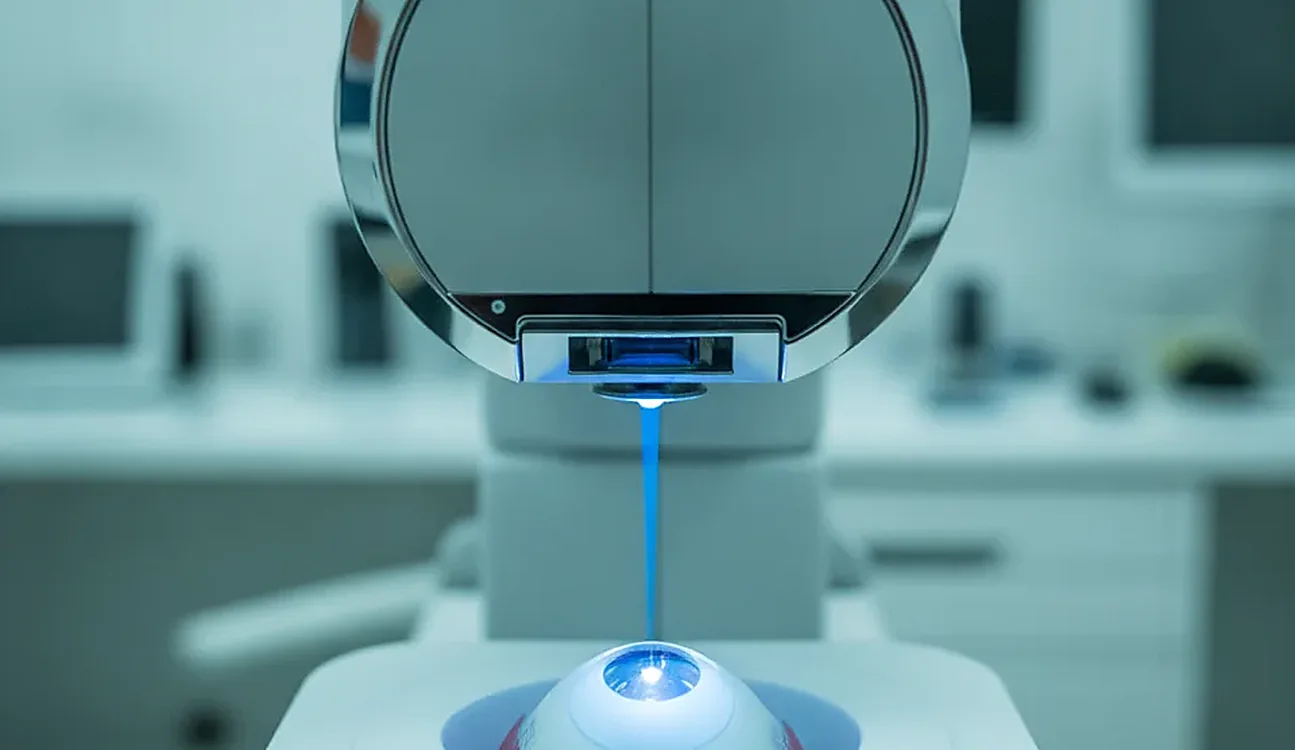
PRK (Photorefractive Keratectomy) is a laser treatment based on reshaping corneal curvature with an excimer laser after the surface layer of the cornea has been removed. It corrects myopia, hyperopia, and astigmatism; it is particularly preferred in thin corneas.

Prof. Dr. Efekan Coşkunseven
Ophthalmology · Istanbul
{ AI · preliminary guidance }
onlineLet's talk about laser refractive surgery

AI responses do not replace a medical diagnosis.
Quick Answer
In PRK, the outermost surface layer of the cornea is removed and the cornea is reshaped with an excimer laser. Because no flap is created, it is preferred in patients with thin corneas; recovery is somewhat longer than with LASIK.
Contents5 sections
What Is PRK Laser Eye Surgery?
PRK is an abbreviation for “Photorefractive Keratectomy” and is based on removing the top layer of the cornea and reshaping corneal curvature with the help of a laser. It is one of the laser treatments applied to correct vision disorders such as myopia, hyperopia, and astigmatism.
How Is It Performed?
During surgery, the outermost layer of the cornea is gently removed, after which the corneal tissue is reshaped with an excimer laser. A temporary contact lens is placed after the procedure.
In Which Cases Is It Applied?
It is applied in cases of myopia, astigmatism, and some hyperopia. It may be preferred especially in people with thin corneas and in patients for whom creating a corneal flap is not suitable.
The Difference Between PRK and LASIK
In PRK, the laser is applied after the surface layer of the cornea is removed, whereas in LASIK, a thin flap is created inside the cornea.
Recovery Process
Sensitivity and tearing may occur in the first few days; visual quality increases over time and becomes more stable within a few weeks.
The results of any surgical or invasive procedure may vary from person to person.
Last updated:
2 questions
Frequently Asked Questions
Short answers to the questions patients ask most about this treatment. Your personal situation is assessed during the examination.
Didn't find your question?
Send us your question directly and our team will get back to you.
-
01 Who is PRK suitable for?
It may be preferred especially in people with thin corneas and in patients for whom creating a corneal flap is not suitable. It is applied in cases of myopia, astigmatism, and some hyperopia.
-
02 What is the difference between PRK and LASIK?
In PRK, the surface layer of the cornea is removed before the laser is applied; in LASIK, a thin flap is created inside the cornea.
Didn't find your question?
Send us your question directly and our team will get back to you.
Related topics
Treatments often evaluated together
-
Laser Refractive Surgery
Laser refractive surgery is a surgical treatment method based on reshaping the cornea with a laser to correct vision disorders such as myopia, hyperopia, and astigmatism. LASIK, iLASIK, PRK, and SMILE techniques are applied following a personalized evaluation.
-
iLASIK Laser Eye Surgery
iLASIK is a modern method that uses two laser technologies together to correct myopia, hyperopia, and astigmatism: a femtosecond laser creates a thin corneal flap, after which an excimer laser reshapes the cornea.
-
Excimer Laser Eye Surgery
Excimer laser is an advanced laser technology that reshapes the corneal tissue at the micron level without generating heat, correcting myopia, hyperopia, and astigmatism. It is used in the core reshaping stage of methods such as LASIK, PRK, and iLASIK.
Clinic



Book an Appointment
Your information reaches Prof. Dr. Efekan Coşkunseven's clinic. A response is made within 24 hours.