keratoconus
Corneal Collagen Cross-Linking (CXL / Cross-Linking)
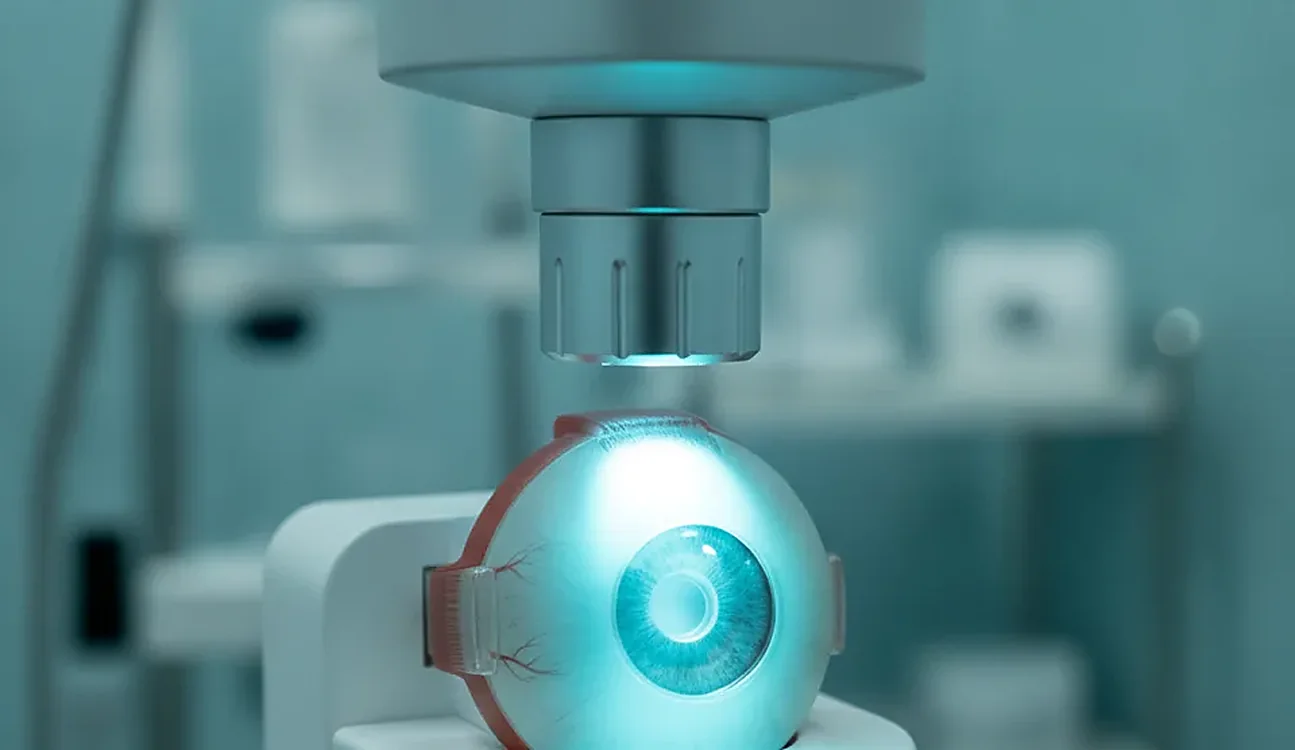
CXL is a method used in keratoconus treatment to increase the structural strength of the cornea in order to halt the progression of the disease. It was first applied in Turkey in 2004 by Prof. Dr. Efekan Coşkunseven.
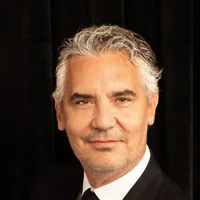
Prof. Dr. Efekan Coşkunseven
Ophthalmology · Istanbul
{ AI · preliminary guidance }
onlineLet's talk about keratoconus

AI responses do not replace a medical diagnosis.
Quick Answer
Corneal cross-linking (CXL) is a minimally invasive procedure that aims to halt the progression of keratoconus by creating new, permanent bonds between the collagen fibers of the cornea using riboflavin (vitamin B2) and UV-A light.
Contents5 sections
What Is Corneal Collagen Cross-Linking (CXL)?
CXL is a method used in keratoconus treatment to increase the structural strength of the cornea in order to halt the progression of the disease. It was first applied in Turkey in 2004 by Prof. Dr. Efekan Coşkunseven.
How Does the Treatment Work?
The treatment is based on a combination of riboflavin (vitamin B2) and UV-A light. This interaction creates new, permanent covalent bonds between the collagen fibers of the cornea, significantly increasing its mechanical strength.
Two Protocols
- Epi-off (classic): The epithelium is scraped off and removed. This allows full penetration of riboflavin but requires 3–5 days of healing after the procedure.
- Epi-on (newer method): The epithelium is preserved, and specially formulated drops are used. The process afterward is more comfortable; however, some specialists debate whether the vitamin penetrates deeply enough.
Suitable Patient Profile
- Early/moderate stage keratoconus
- Patients who do not yet have serious vision loss
- Those whose corneal thickness is within normal limits
- Cases showing signs of progression
Scientific Evidence
Follow-up studies spanning 10–15 years have shown that disease progression is largely halted. It has also been proven to significantly reduce the need for corneal transplantation.
The results of any surgical or invasive procedure may vary from person to person.
Last updated:
3 questions
Frequently Asked Questions
Short answers to the questions patients ask most about this treatment. Your personal situation is assessed during the examination.
Didn't find your question?
Send us your question directly and our team will get back to you.
-
01 Does CXL stop the progression of keratoconus?
Follow-up studies spanning 10–15 years have shown that disease progression is largely halted. CXL has also been proven to significantly reduce the need for corneal transplantation.
-
02 What is the difference between epi-off and epi-on?
In the epi-off (classic) method, the epithelium is scraped off and removed; this allows full penetration of riboflavin but requires 3–5 days of healing. In the epi-on method, the epithelium is preserved and specially formulated drops are used; recovery afterward is more comfortable, although some specialists debate whether the vitamin penetrates deeply enough.
-
03 Who is suitable for CXL?
Patients with early/moderate stage keratoconus, who do not yet have serious vision loss, whose corneal thickness is within normal limits, and who show signs of progression are suitable candidates for CXL. Suitability is determined through a detailed examination.
Didn't find your question?
Send us your question directly and our team will get back to you.
Related topics
Treatments often evaluated together
-
Keratoconus Treatment
Keratoconus is a progressive eye disease in which the cornea gradually thins and bulges forward into a cone shape over time. Early diagnosis and the choice of an appropriate method (crosslinking/CXL, CAIRS, and intracorneal ring segments) are critical for controlling the disease.
-
Intracorneal Ring Segment Treatment (Intacs / Keraring)
In keratoconus and corneal shape disorders, transparent ring segments (Intacs / Keraring) placed inside the cornea reshape the corneal surface; corneal curvature is reduced, astigmatism is lowered, and visual quality is improved.
-
CAIRS Treatment (Corneal Allogenic Intrastromal Ring Segments)
CAIRS (Corneal Allogenic Intrastromal Ring Segments) is a next-generation ring method in keratoconus treatment in which segments prepared from natural corneal tissue, rather than synthetic materials, are placed inside the cornea.
Clinic



Book an Appointment
Your information reaches Prof. Dr. Efekan Coşkunseven's clinic. A response is made within 24 hours.