keratoconus
Intracorneal Ring Segment Treatment (Intacs / Keraring)
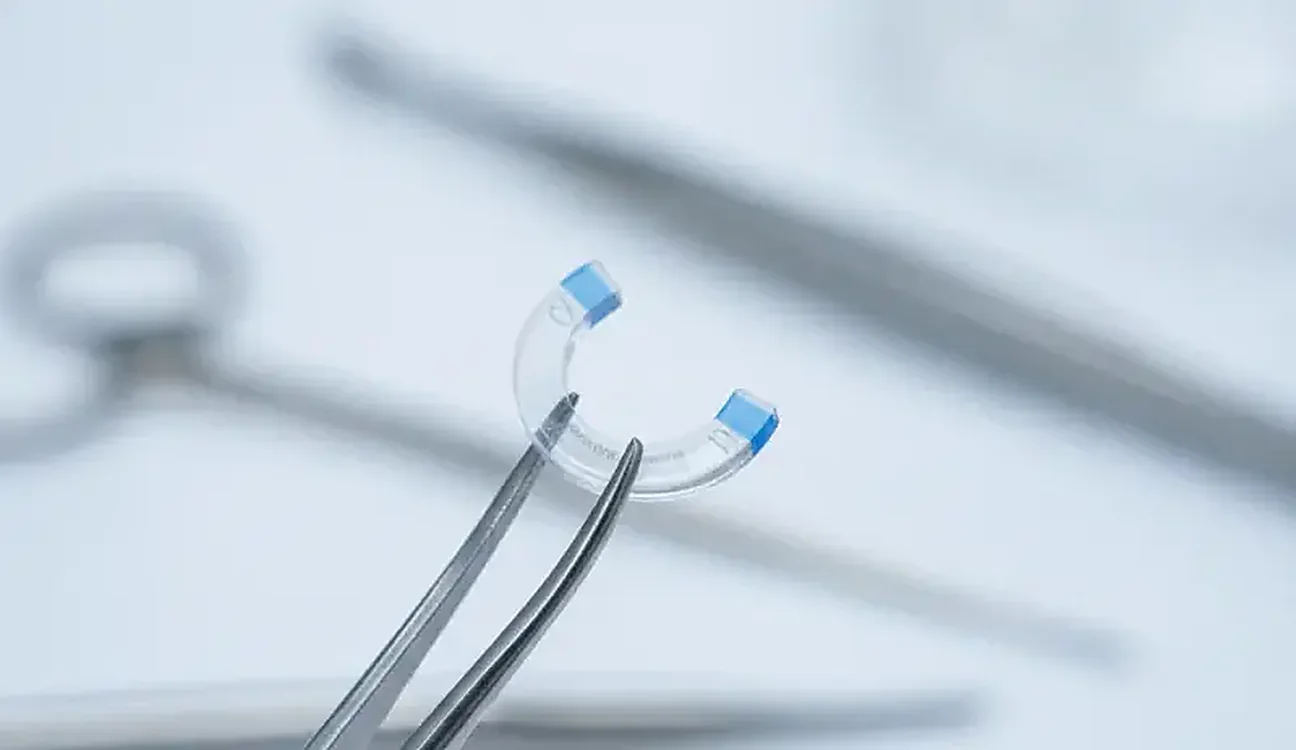
In keratoconus and corneal shape disorders, transparent ring segments (Intacs / Keraring) placed inside the cornea reshape the corneal surface; corneal curvature is reduced, astigmatism is lowered, and visual quality is improved.

Prof. Dr. Efekan Coşkunseven
Ophthalmology · Istanbul
{ AI · preliminary guidance }
onlineLet's talk about keratoconus

AI responses do not replace a medical diagnosis.
Quick Answer
In intracorneal ring segment treatment, ring segments made of biocompatible material are placed into tunnels opened with a femtosecond laser. By flattening the cornea, it improves vision with glasses; it is frequently applied together with cross-linking (CXL).
Contents7 sections
What Is Intracorneal Ring Segment Treatment?
This is a method used in keratoconus and corneal shape disorders. Rings made of biocompatible materials called Intacs or Keraring are placed inside the cornea. This procedure helps the cornea form a smoother surface, improving vision.
Why Does Keratoconus Require Ring Treatment?
Keratoconus is a progressive eye disease that occurs when the corneal layer thins and takes on a cone shape. Ring treatment reduces corneal curvature, lowers astigmatism, and improves visual quality.
The Difference Between Intacs and Keraring
- Intacs: Thicker segment options, wider-diameter rings.
- Keraring: More segment options, a finely adjustable structure; advantageous in irregular astigmatism.
Suitable Candidates
- People diagnosed with keratoconus
- Those with sufficient corneal thickness
- Patients who cannot tolerate contact lenses
- More successful results in early and moderate stage keratoconus
Very advanced keratoconus, insufficient corneal thickness, corneal scarring, active eye infection, and uncontrolled eye diseases are conditions in which this treatment is not suitable.
Surgical Process
Micron-level precise tunnels are created inside the cornea with the help of a femtosecond laser. With local anesthesia, pain is not expected, though pressure or brief discomfort may occur; the surgery requires no sutures, and the patient is discharged the same day. The procedure takes 10–15 minutes.
Recovery Process
- First days: Mild stinging, light sensitivity
- First week: Vision begins to sharpen
- 1–3 months: Vision becomes stable
Combination with Cross-Linking
Ring treatment is frequently applied together with cross-linking (CXL). While the ring corrects vision, cross-linking strengthens the cornea and halts the progression of the disease. This method can delay the need for a corneal transplant for years in many patients.
The results of any surgical or invasive procedure may vary from person to person.
Last updated:
9 questions
Frequently Asked Questions
Short answers to the questions patients ask most about this treatment. Your personal situation is assessed during the examination.
Didn't find your question?
Send us your question directly and our team will get back to you.
-
01 Is the surgery painful?
No, drop anesthesia is used. Mild stinging may occur after surgery.
-
02 How long does the surgery take?
10–15 minutes; 1–2 hours in total at the hospital.
-
03 When does vision improve?
Visual quality begins to improve in the first weeks and becomes more stable within 1–3 months.
-
04 Does it fully correct vision?
No; the goal is to reduce astigmatism and improve visual quality. Completely eliminating the glasses prescription is not the aim.
-
05 Does it stop keratoconus?
On its own, it does not fully stop the progression of the disease; it is more effective in combination with cross-linking (CXL). While the ring corrects vision, CXL strengthens the cornea and halts progression.
-
06 Can the ring be felt or seen from outside?
A mild foreign-body sensation may occur in the first few days; it is not felt afterward. Because it is transparent, it usually cannot be noticed from the outside.
-
07 Can it be removed?
Yes; being reversible is an important advantage. It can be removed or replaced if necessary.
-
08 Does it prevent the need for a corneal transplant?
It does not fully prevent it; however, in many patients it can delay the need for a corneal transplant for years.
-
09 Can it be performed on everyone?
No; a detailed examination and measurements are required. It is not suitable for patients with very advanced keratoconus, insufficient corneal thickness, corneal scarring, or active eye infection.
Didn't find your question?
Send us your question directly and our team will get back to you.
Related topics
Treatments often evaluated together
-
Keratoconus Treatment
Keratoconus is a progressive eye disease in which the cornea gradually thins and bulges forward into a cone shape over time. Early diagnosis and the choice of an appropriate method (crosslinking/CXL, CAIRS, and intracorneal ring segments) are critical for controlling the disease.
-
Corneal Collagen Cross-Linking (CXL / Cross-Linking)
CXL is a method used in keratoconus treatment to increase the structural strength of the cornea in order to halt the progression of the disease. It was first applied in Turkey in 2004 by Prof. Dr. Efekan Coşkunseven.
-
CAIRS Treatment (Corneal Allogenic Intrastromal Ring Segments)
CAIRS (Corneal Allogenic Intrastromal Ring Segments) is a next-generation ring method in keratoconus treatment in which segments prepared from natural corneal tissue, rather than synthetic materials, are placed inside the cornea.
Clinic



Book an Appointment
Your information reaches Prof. Dr. Efekan Coşkunseven's clinic. A response is made within 24 hours.