









Corneal Diseases
The term "corneal disease" refers to a range of conditions that affect your cornea. Your cornea is the clear, transparent window at the front of your eye, acting as a barrier against harmful external factors. It also plays a significant role in your vision.
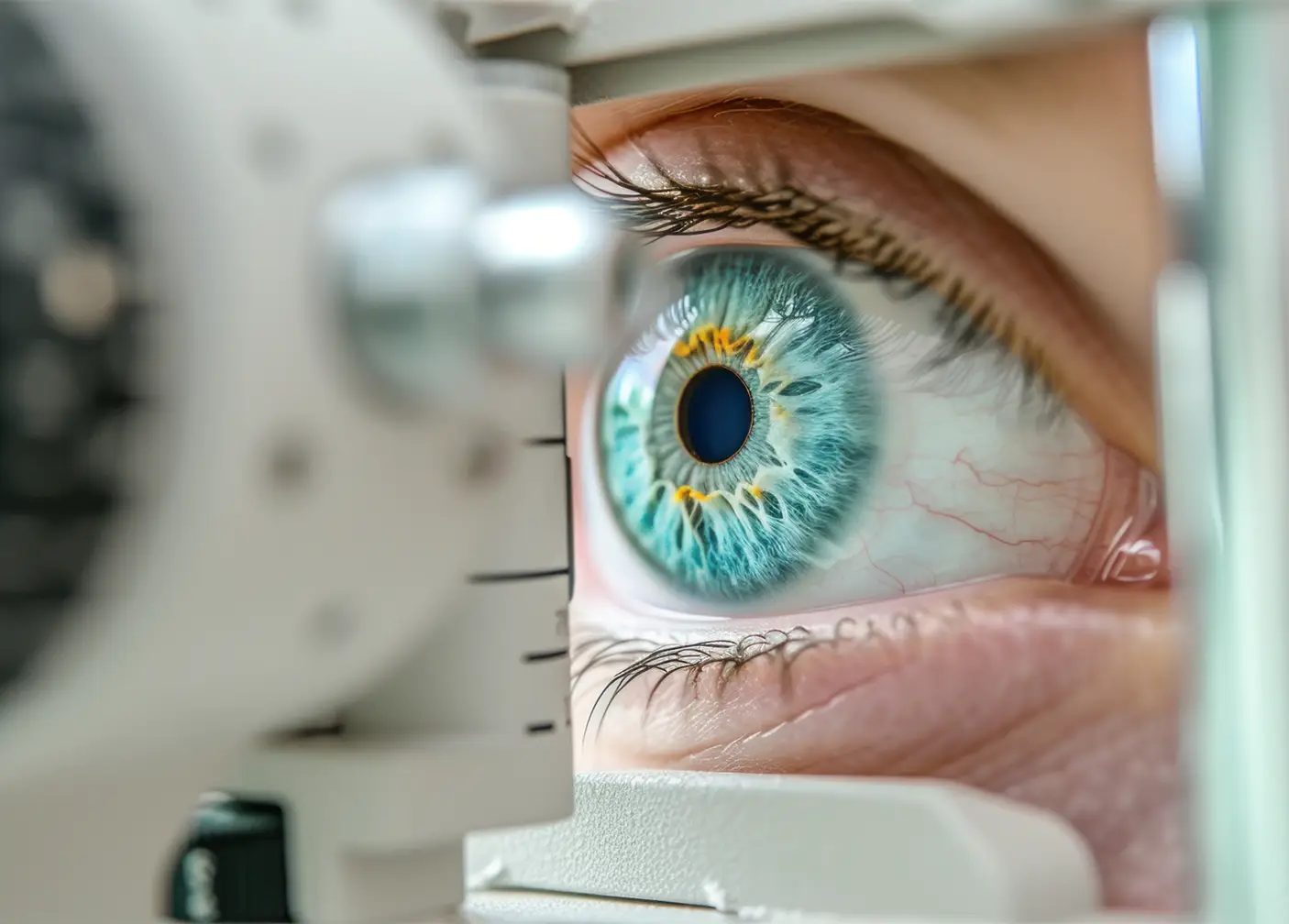
What Is the Cornea and What Does It Do?
The cornea is the transparent, dome-shaped structure that forms the outermost layer of the eye. It is one of the primary elements responsible for refracting light and focusing it onto the retina. This transparent layer controls the entry of light into the eye and focuses it precisely for clear vision. The cornea also acts as a shield, protecting the front surface of the eye.
Corneal Anatomy:
-
Epithelial Layer: The outermost layer, covering the surface of the cornea. Because the corneal epithelium is supplied by thousands of nerve endings, the cornea is the most sensitive area of the body in terms of its neural network.
-
Bowman's Layer: A collagen-based layer situated beneath the epithelium. If injured, it can leave permanent scarring on the cornea.
-
Stroma: The thickest layer of the cornea, playing a central role in the refraction of light.
-
Descemet's Membrane: A resilient layer located on the inner surface of the cornea.
-
Endothelial Layer: The innermost layer, responsible for transporting fluid from inside the eye out through the cornea, thereby maintaining its transparency.
The cornea also contributes to the overall protection of the eye, forming a barrier against dust, pathogens, and other harmful substances. It is continuously kept moist by the tear film, which helps maintain corneal health and proper function.
Our Recommendation
Regular eye examinations are recommended for anyone who wishes to maintain corneal health and reduce the risk of corneal problems.
Corneal Diseases: An Overview
If you are experiencing symptoms of corneal disease — such as pain, blurred vision, or light sensitivity — see an ophthalmologist promptly. Regular eye examinations are also important even when your vision seems fine. Your ophthalmologist will advise you on how frequently you should be examined based on your age, medical history, and other relevant factors.
The Most Common Corneal Diseases
The most common corneal diseases can be classified under these three main categories.
1. Keratitis:
Keratitis is inflammation of the cornea. It can arise from both infectious and non-infectious causes. Infectious keratitis may be caused by bacterial, viral, fungal, or parasitic agents. The risk increases particularly among contact lens wearers who do not follow proper hygiene practices.
-
Symptoms: Eye redness, pain, light sensitivity, blurred vision, and tearing.
2. Corneal Dystrophies:
These are a group of genetic disorders characterized by abnormal deposits of protein, fluid, or other material in one or more layers of the cornea. Some corneal dystrophies are progressive — meaning they worsen over time — and certain forms have a greater impact on vision. Fuchs' dystrophy is the most common type. Other types include epithelial basement membrane dystrophy, lattice corneal dystrophy, and granular corneal dystrophy.
-
Symptoms: Blurred vision, corneal opacification, and light sensitivity.
3. Corneal Ectasias:
This is a group of conditions that alter the shape of the cornea, causing it to thin and bulge outward. Keratoconus is the most common type within this group. The condition typically begins during adolescence and follows a progressive course. Corneal ectasia may not cause symptoms initially, but can gradually affect your vision over time. It can lead to serious complications such as corneal hydrops.
-
Symptoms: Blurred vision, halos around lights, and difficulty achieving clear vision even with glasses or contact lenses.
Other Corneal Diseases
Bullous Keratopathy:
This condition involves the development of corneal edema and associated fluid-filled blisters (bullae) on the surface of the cornea. It can occur following eye surgery or as a result of corneal dystrophy. Symptoms are typically worse in the morning and include blurred vision and light sensitivity.
-
Symptoms: Eye pain, blurred vision, light sensitivity, and tearing.
Herpes Simplex Keratitis:
Caused by the herpes simplex virus, this condition leads to infection of the cornea. It typically presents as recurring episodes.
-
Symptoms: Eye pain, redness, blurred vision, light sensitivity, and tearing.
Pterygium:
A growth that forms on the white part of the eye and can extend onto the cornea, occasionally leaving scar tissue behind.
-
Symptoms: Eye redness and blurred vision.
Corneal diseases can be managed effectively with early diagnosis and treatment. Left untreated, they can lead to vision loss.
Our Recommendation
Early diagnosis and treatment are strongly recommended for individuals experiencing symptoms of corneal disease or any degree of vision loss.
Causes of Corneal Diseases
Corneal diseases can have many causes. Genetic predisposition, infections, and environmental factors all play an important role in their development.
1. Genetic Factors:
Some corneal diseases, such as keratoconus and corneal dystrophies, are associated with genetic predisposition. Individuals with a family history of corneal disease may be more vulnerable to developing these conditions.
2. Infections:
Corneal infections are typically bacterial, viral, fungal, or parasitic in origin. Contact lens wearers who do not follow proper hygiene practices are at significantly higher risk of such infections.
3. Trauma:
Blunt impacts to the eye or chemical burns can damage the cornea and lead to serious complications. If left untreated, corneal trauma may result in permanent vision loss.
4. Environmental Factors:
Prolonged exposure to UV radiation can damage corneal cells and contribute to disease. Dry and dusty environments can also have an adverse effect on corneal health.
5. Contact Lens Use:
Using contact lenses without adhering to proper hygiene guidelines can lead to corneal infections. Failing to clean lenses regularly or replace them on schedule can cause infections that result in serious vision loss.
Early diagnosis and treatment of corneal diseases are critical for halting disease progression and preventing vision loss.
Our Recommendation
Regular eye examinations and preventive measures are recommended for individuals with known risk factors.
Symptoms of Corneal Diseases
Corneal diseases can manifest in a variety of ways. Symptoms typically include eye pain, blurred vision, and sensitivity to light. The most common symptoms of corneal disease are:
-
Blurred Vision: Distortion or inflammation of the cornea interferes with proper light refraction, resulting in blurred vision.
-
Light Sensitivity: People with corneal disease often become sensitive to bright lights.
-
Eye Pain: When the cornea becomes inflamed or damaged, it can cause severe pain in the eye.
-
Redness and Excessive Tearing: Infections and certain other corneal conditions can cause redness of the cornea or conjunctiva, along with excessive watering of the eye.
-
Reduced Visual Clarity: Corneal disease can cause vision problems that cannot be corrected even with glasses or contact lenses.
If you experience one or more of these symptoms, it is important to see an ophthalmologist without delay. Early diagnosis offers a significant advantage in the treatment of corneal diseases.
Our Recommendation
Anyone experiencing these symptoms should consult an ophthalmologist for a corneal disease evaluation.
Corneal Disease Treatment
The treatment of corneal diseases varies depending on the type and severity of the condition. Early-stage diseases can often be managed with medication, while more advanced cases may require surgical intervention.
1. Eye Drops:
Antibiotic or antiviral eye drops are used in the treatment of keratitis and other infections. These medications help bring the infection under control and support corneal healing. Artificial tear drops may also be recommended for conditions such as dry eye syndrome.
2. Glasses or Contact Lenses:
If they provide a meaningful improvement in vision, glasses or soft and rigid contact lenses may be prescribed to correct refractive errors.
3. Laser Treatment:
Laser treatment is a method used to address irregularities on the corneal surface. It can be applied in a range of corneal diseases, particularly in patients with keratoconus.
4. Corneal Collagen Cross-Linking (CXL):
In progressive corneal diseases such as keratoconus, corneal collagen cross-linking is performed to strengthen the cornea and halt disease progression. The treatment works by stiffening the corneal tissue, thereby stopping further deterioration.
5. Corneal Transplantation (Keratoplasty):
In advanced stages of corneal disease, where the cornea has sustained severe damage, a corneal transplant may be necessary. Keratoplasty involves removing the damaged corneal tissue and replacing it with healthy donor cornea. This procedure is generally considered when other treatment options have not been successful.
Who Is a Candidate?
Appropriate treatment options are available for patients who have been diagnosed with a corneal disease and are experiencing vision problems.
Corneal Transplantation (Keratoplasty)
Corneal transplantation is a surgical procedure performed when the cornea has sustained irreversible damage. The procedure involves replacing the damaged cornea with a healthy donor cornea. In appropriate cases, corneal transplantation has the potential to substantially restore lost vision.
There are three surgical options for corneal transplantation: Penetrating Keratoplasty, Deep Anterior Lamellar Keratoplasty (DALK), and Endothelial Keratoplasty (DMEK). Each of these procedures targets a specific layer or layers of corneal tissue. In all corneal transplantations, corneas obtained from organ donors are used. Every donor cornea undergoes comprehensive testing to confirm it is safe for transplantation.
How should I prepare for corneal transplantation?
Your surgeon and anesthesia team will review your medical history, answer your questions, and advise you on the most appropriate anesthesia plan for your surgery. You will be informed whether you need to stop taking any medications or using any products prior to the procedure.
Who Is a Candidate for Corneal Transplantation?
Corneal transplantation may be indicated in the advanced stages of progressive conditions such as keratoconus, or in cases of severe corneal damage caused by infection. Genetic corneal dystrophies and traumatic corneal injuries are also among the conditions for which transplantation may be appropriate.
Post-Operative Recovery:
The recovery process can vary from patient to patient and depends on the surgical technique used, but it generally takes several months. Regular post-operative eye examinations and consistent use of prescribed medications support a smoother recovery. During this period, you should protect your eyes and follow your doctor's instructions closely. Corneal transplantation requires an ongoing follow-up schedule — more frequent visits (weekly or monthly) in the early stages, followed by annual check-ups thereafter.
Who Is This Procedure Suitable For?
Corneal transplantation is suitable for individuals with significant vision loss and advanced corneal disease.
Frequently Asked Questions
For More Information, Please Get in Touch
Error: Contact form not found.
